A method is useful only when its assumptions match the physical setting. Each guide
explains the problem, available approaches, an illustrative industrial example,
and limits that should remain visible during evaluation. Proposed examples describe
research designs; they are not claims of completed Aperture experiments or deployed
systems.
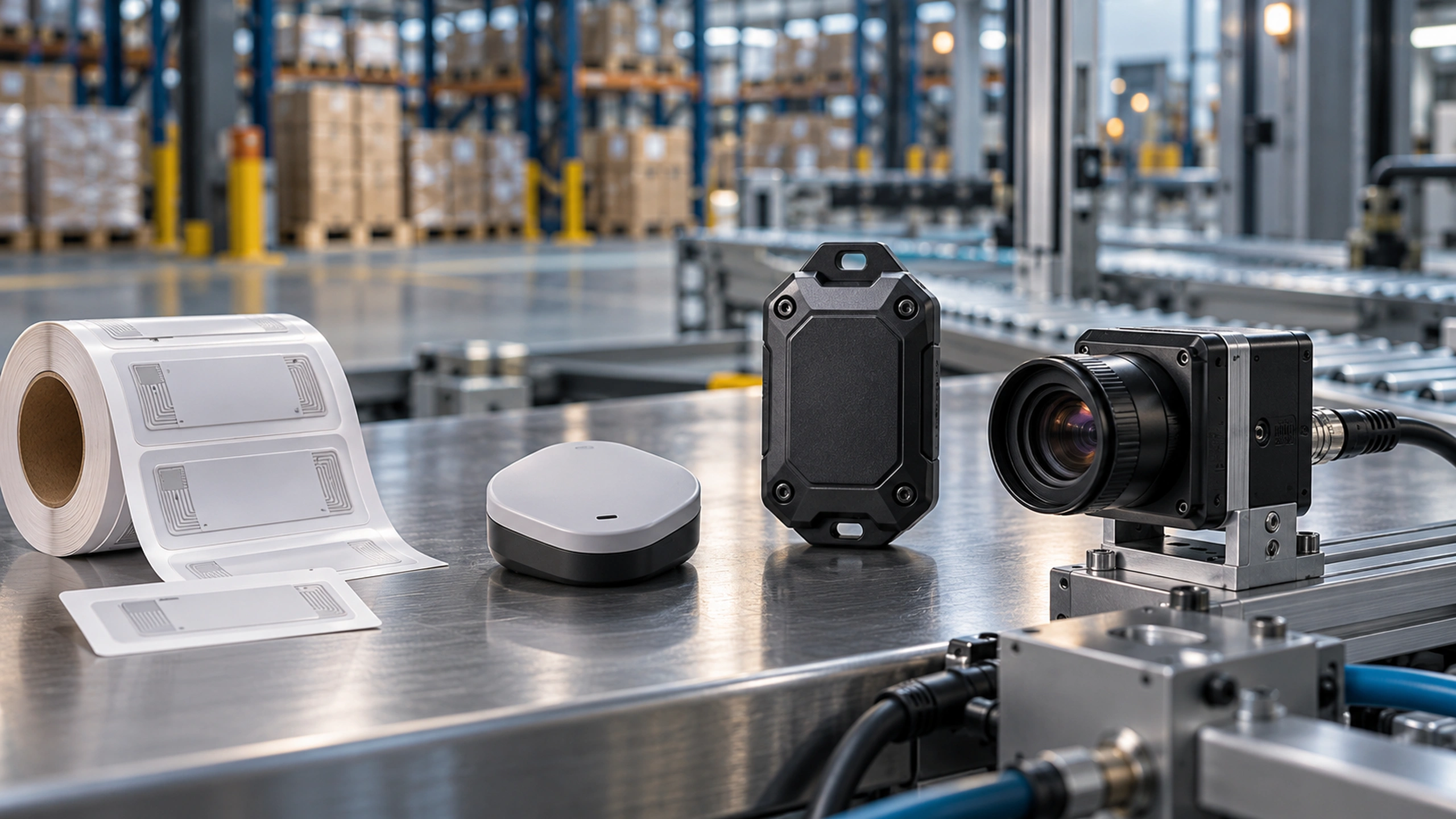
For example, a receiving trial might move tagged items into storage while deliberately
introducing missed reads, camera occlusion, and delayed messages. An independently
recorded account of identity and movement would help establish which observations
were correct. Comparing the same trials across individual modalities and a combined
approach would show where additional evidence helps and where it introduces new
failure modes.
Evaluation should include difficult conditions, rejected observations, and recovery
after a disruption. An average error alone can conceal occasional identity switches
or a location estimate that remains stale after movement. Useful evidence connects
each result to the apparatus, baseline, sample scope, ground truth, and conditions
under which it was obtained.